
A transparent first-year testing retrospective focused on decisions, tradeoffs, and what families should learn from the process. In my household, that means looking at parental controls for families as a practical family system rather than a pile of settings. I am Lydia Carver, a Portland mom and former elementary-school-district library technology coordinator, and I test family technology in the middle of normal life: homework, breakfast, charging cables, forgotten passwords, and the occasional child who discovers a setting I thought nobody would notice. The goal is not to make technology disappear. It is to make the important decisions easier to understand and maintain. Safer, saner, and still within the family budget.
The Most Useful Result Was Not a Gadget
What I Look For
After a year of family technology testing, the most valuable thing we gained was a repeatable way to decide what belongs in the house. Parental controls for families can be marketed as a feature race, but our actual experience was much less glamorous. The tools that stayed were the ones adults could explain and maintain.
We also returned or skipped products when the cost, complexity, privacy tradeoff, or child experience did not fit our household.
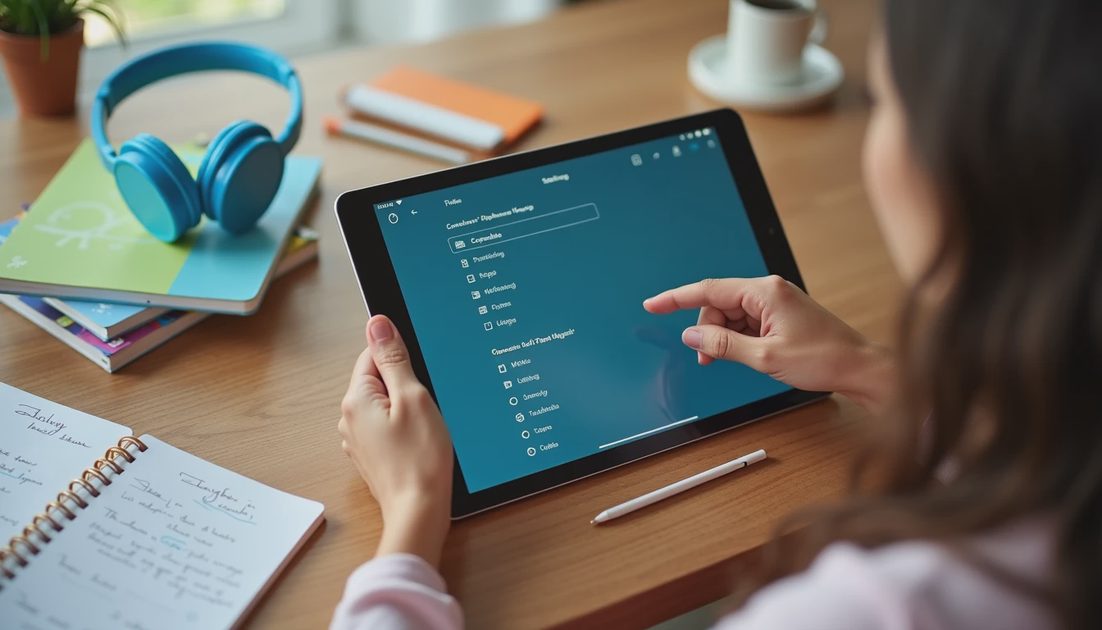
What Made a Product Worth Keeping
I use six categories: safety, privacy, cost, setup time, child usability, and maintenance burden. A product does not have to win every category. It does need a clear reason to exist.
Evaluation area | Question I ask |
|---|---|
Safety | Does it address the problem we actually have? |
Privacy | What information does the service require or retain? |
Cost | What is the purchase plus ongoing cost? |
Setup | Can an ordinary parent configure it? |
Child usability | Can the child use legitimate features without constant help? |
Maintenance | Will we still manage it next month? |
This framework is also why I avoid declaring a universal “best parental control app for families.” A tool can fit one household and frustrate another.

What We Refused
The Household Reality
We refused products that added complexity without solving a clear problem. We also became skeptical of devices that relied on vague safety language while giving parents little information about privacy or maintenance.
On the tablet side, we looked beyond specifications. A device that requires an awkward charging routine, lacks a sensible account structure, or creates repeated support chores can cost more in family time than its price tag suggests.
The lesson I would carry into a second year is simple: test the household system, not just the product. If the family cannot live with the setup, the product is not doing its job.
Safer, saner, and still within the family budget. That remains the standard I want this site to use.
A Simple Way to Keep It Working
The final test is whether the setup survives an ordinary Tuesday. A family technology system should still make sense when a child is late for school, a parent is answering a work message, a charger has disappeared, and somebody needs a school website that was not on yesterday’s list. That is why I prefer small, documented changes over dramatic lockdowns.
For a monthly review, I return to the same questions: what changed, which devices are still in use, which accounts need attention, and which rule is causing unnecessary friction? If a control creates more work than value, I investigate whether the setting can be simplified. If a privacy choice is unclear, I look for the provider’s current documentation before making a decision. I do not assume that a feature works the same way across every device or account.
Jonah often provides the final test. If he can follow the setup without asking me where a setting lives, the system is probably understandable enough for our family. That is a modest standard, but it is useful. Parents should not need to become full-time IT administrators just to create reasonable boundaries at home.
If your household is anything like mine, someone will try to bypass this. Treat that moment as information. It may reveal a weak setting, an unclear rule, or simply a child who is curious. Fix the actual problem, explain the reason for the boundary, and move on. The goal is a workable family system, not a technology contest.
Before You Change Anything
One habit has made my testing much more useful: I write down the current behavior before I touch a setting. If the issue is slow Wi-Fi, I note where it happens and which devices are affected. If the issue is a bedtime conflict, I write down the actual routine rather than my ideal routine. If the issue is privacy, I record the permission or account choice that raised the question. This gives me something concrete to compare after the change.
I also avoid changing several variables at once. When three settings change together, it becomes difficult to know which one helped and which one created a new problem. One calm change followed by a real-life test usually produces more useful information than a long afternoon of configuration.
For families, maintenance is part of the decision. Ask who will update the device, who will approve exceptions, who can recover the account, and who will know what to do when the child gets a new tablet. Those questions are not technical trivia. They determine whether the system remains useful after the setup day.


No comments yet — be the first to share a thought.